
Musk, Huang and Cook to Dine With Xi: Corporate Stakes Explained
Top US CEOs meet China's president as their companies face major trade and regulatory hurdles in the world's second-largest economy.
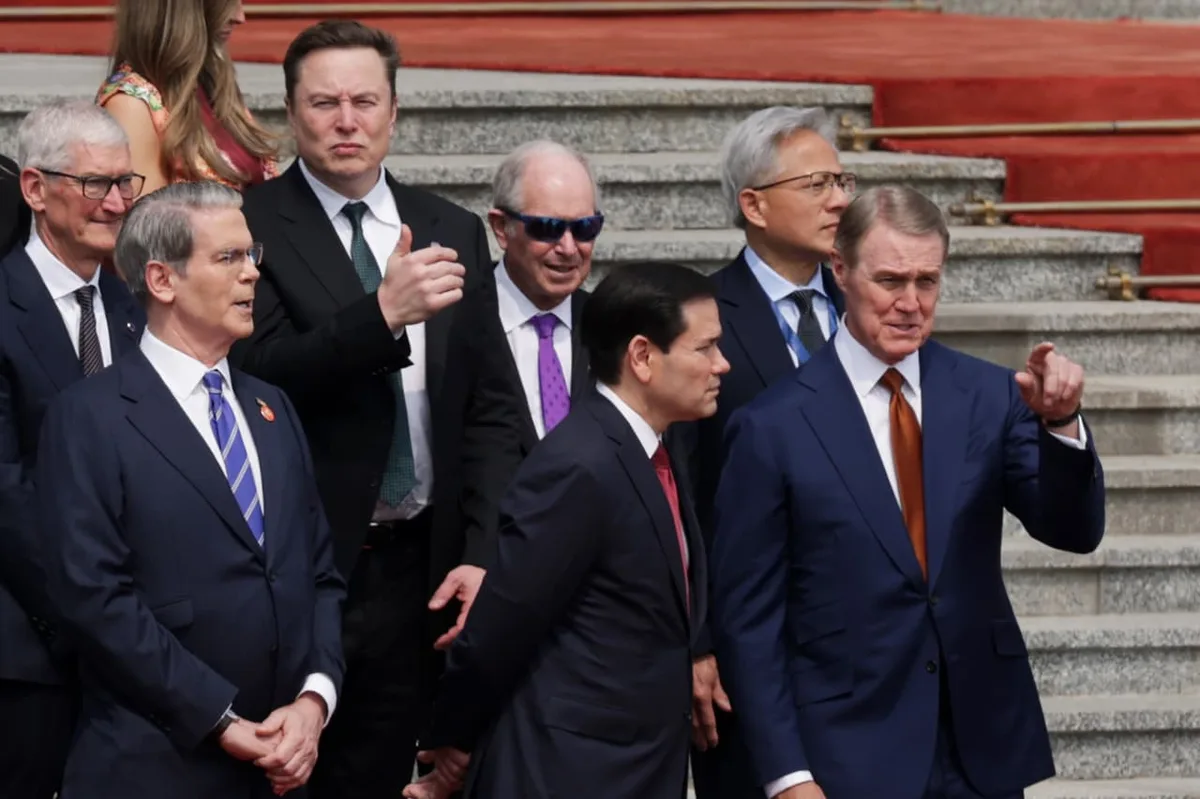
Some of America's most powerful corporate leaders — Elon Musk, Jensen Huang, and Tim Cook — are scheduled to dine with Chinese President Xi Jinping this week, a gathering that underscores how deeply intertwined US technology and business giants remain with China despite mounting geopolitical tensions between Washington and Beijing.
The guest list, convened at the Trump White House, maps almost perfectly onto corporate America's most pressing China-related concerns. Tesla depends heavily on its sprawling Shanghai manufacturing facility, which serves as a critical production hub for vehicles sold across Asia and beyond. Any disruption to that operation — through tariffs, regulatory friction, or deteriorating diplomatic relations — would carry significant financial consequences for Musk's electric vehicle company.
Read more Revolve Partners With Donatella Versace in Youth Fashion Push →
For Nvidia CEO Jensen Huang, the stakes center on artificial intelligence. The chipmaker has faced US government restrictions blocking the export of its most advanced AI chips to Chinese customers, cutting off what had been a substantial and fast-growing revenue stream. Huang's presence at the dinner signals the semiconductor industry's urgent interest in reshaping or softening those export controls as competition in global AI infrastructure intensifies.
Apple's Tim Cook rounds out the trio with his own set of China dependencies. The iPhone maker relies on Chinese manufacturing partners for the bulk of its global hardware production and counts China among its largest consumer markets. Cook has long cultivated relationships with Chinese officials, and his attendance at this high-profile dinner reflects the ongoing balancing act Apple performs between US policy demands and its deep operational ties to China.
The broader tableau — which reportedly also involves Citigroup's pursuit of a long-delayed brokerage license in China — illustrates how US corporate interests can diverge sharply from Washington's harder-line trade and technology policies. Whether the dinner produces any concrete outcomes for these companies remains to be seen. Continue reading at MarketWatch.com