
Restaurant Brands vs. McDonald's: Revenue Trends Compared
Two fast-food giants face off on revenue performance. Here's how their financial trajectories stack up.
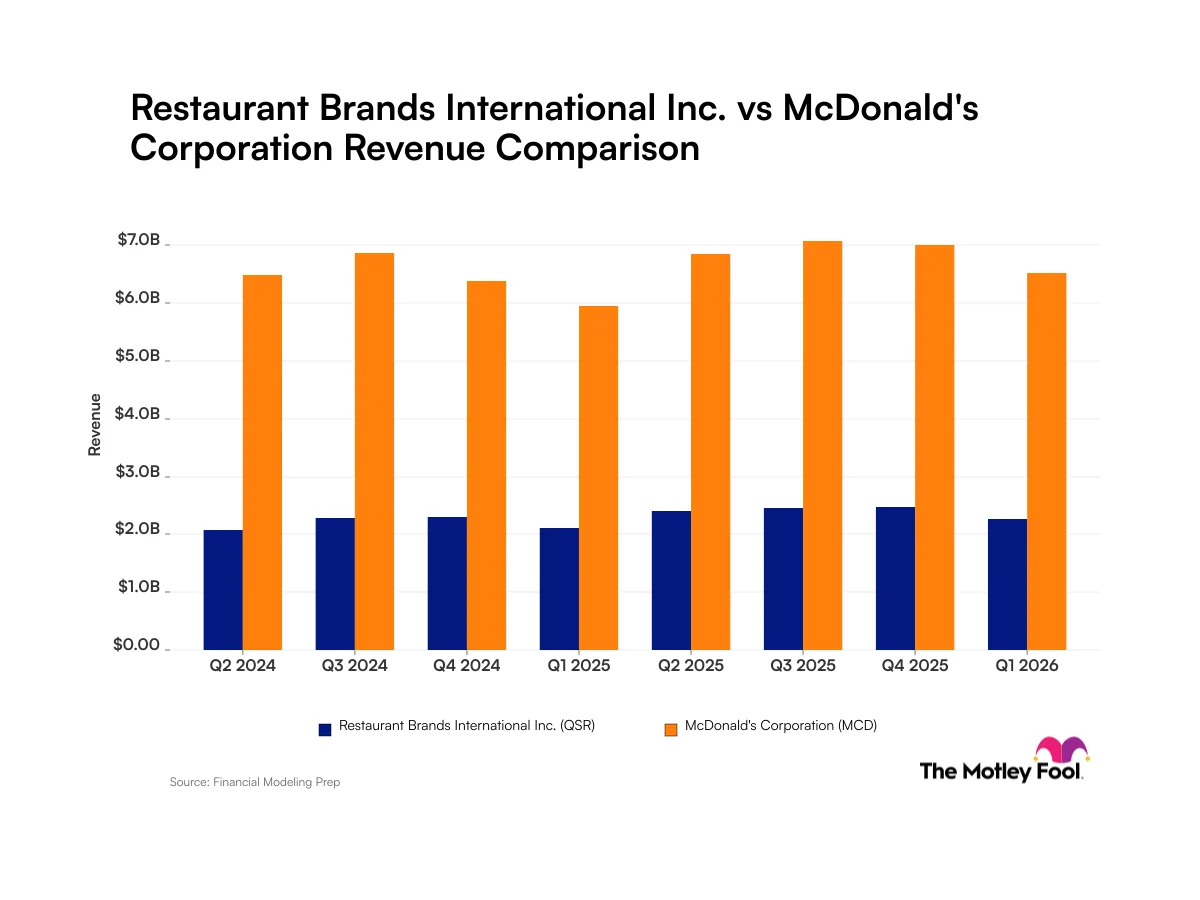
Restaurant Brands International and McDonald's, two of the most recognizable names in global fast food, are drawing renewed investor attention as analysts weigh their contrasting revenue trajectories against a backdrop of shifting consumer spending habits and persistent inflationary pressure on dining budgets.
McDonald's has long held the commanding position in systemwide sales, leveraging its massive global footprint and aggressive value-menu promotions to sustain customer traffic even as discretionary spending tightens. The chain's scale gives it pricing power and marketing reach that few competitors can match, making it a benchmark against which rivals are routinely measured.
Read more Ritholtz Wealth Management Holds $2.79M Stake in Palo Alto Networks →
Restaurant Brands International, the parent company behind Burger King, Tim Hortons, Popeyes, and Firehouse Subs, takes a different structural approach — operating almost entirely through a franchise model that generates royalty and fee income rather than direct restaurant revenue. That asset-light strategy can produce resilient margins but also means top-line growth depends heavily on franchisee performance and new unit openings across its portfolio of brands.
For investors comparing the two, the key distinctions lie in diversification, geographic exposure, and same-store sales momentum. McDonald's derives significant revenue from company-operated locations in addition to franchising, while RBI's consolidated figures reflect the aggregate health of four distinct brand identities competing in different daypart and cuisine segments. Macro headwinds — including value-seeking behavior among lower-income consumers — are pressuring both companies, but each is responding with distinct promotional and refranchising strategies.
Understanding which company offers stronger revenue durability requires a close look at segment-by-segment performance, comparable sales growth, and unit economics over recent reporting periods. Continue reading at Yahoo Finance.