
Trump Threatens More Canada Tariffs Over Wildfire Smoke Pollution
President Trump blamed Canada for cross-border smoke and vowed new tariffs, even as two Minnesota wildfires crossed north into Canada.
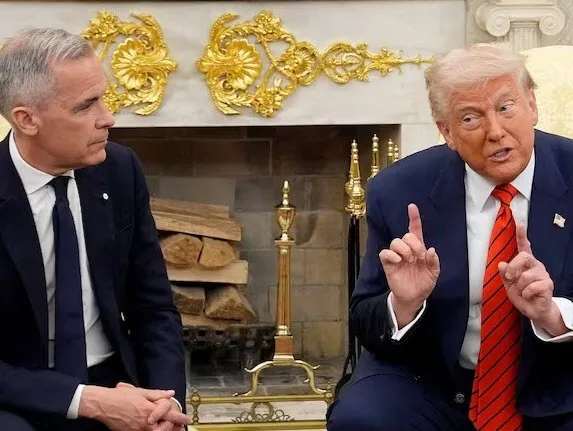
President Donald Trump announced Monday he will impose additional tariffs on Canada, accusing Ottawa of "willful negligence" in forest management that he says allows smoke from Canadian wildfires to invade U.S. airspace. In a public statement, Trump called the cross-border air pollution "filthy, polluted, and unhealthy" and said he would phone Canadian Prime Minister to demand action, warning that cleanup costs "must of necessity be added to the tariffs Canada is currently paying."
The announcement came on a day when fire conditions underscored the complexity Trump appeared to dismiss. Two active wildfires burning in Minnesota crossed the border northward into Canada: the Bear Trap Fire in the Boundary Waters Canoe Area Wilderness grew to more than 34,000 acres and pushed into Ontario, while the Thumb Fire exceeded 15,300 acres before also crossing into Canadian territory — meaning American-origin blazes were themselves spreading smoke and flame into Canada, not the reverse.
Read more The Privacy Paradox of Protecting Kids Online →
Experts and former firefighters note that northern Canada's boreal forest — a vast, largely roadless, coniferous landscape — is structurally predisposed to burning under dry conditions, and that conventional forest-management techniques have limited effectiveness at that scale. The region is nearly uninhabited, making ground-based debris removal logistically impossible across millions of acres.
Financial markets showed little reaction to Trump's threat. The Canadian dollar remained essentially flat following the statement, a signal that currency traders view the tariff warning as politically driven rather than a credible near-term policy shift. Canada is already subject to existing U.S. tariff measures, and any additional levies would require formal trade processes to implement.
The episode adds another flashpoint to already strained U.S.-Canada trade relations, blending environmental rhetoric with economic leverage in a manner that analysts say conflates weather events with bilateral policy. Continue reading at Forexlive.