
US Auto Industry Braces for Uncertainty Over USMCA Trade Deal
Automakers face growing uncertainty as the USMCA trade deal's future remains unclear, with rules of origin at the center of the dispute.
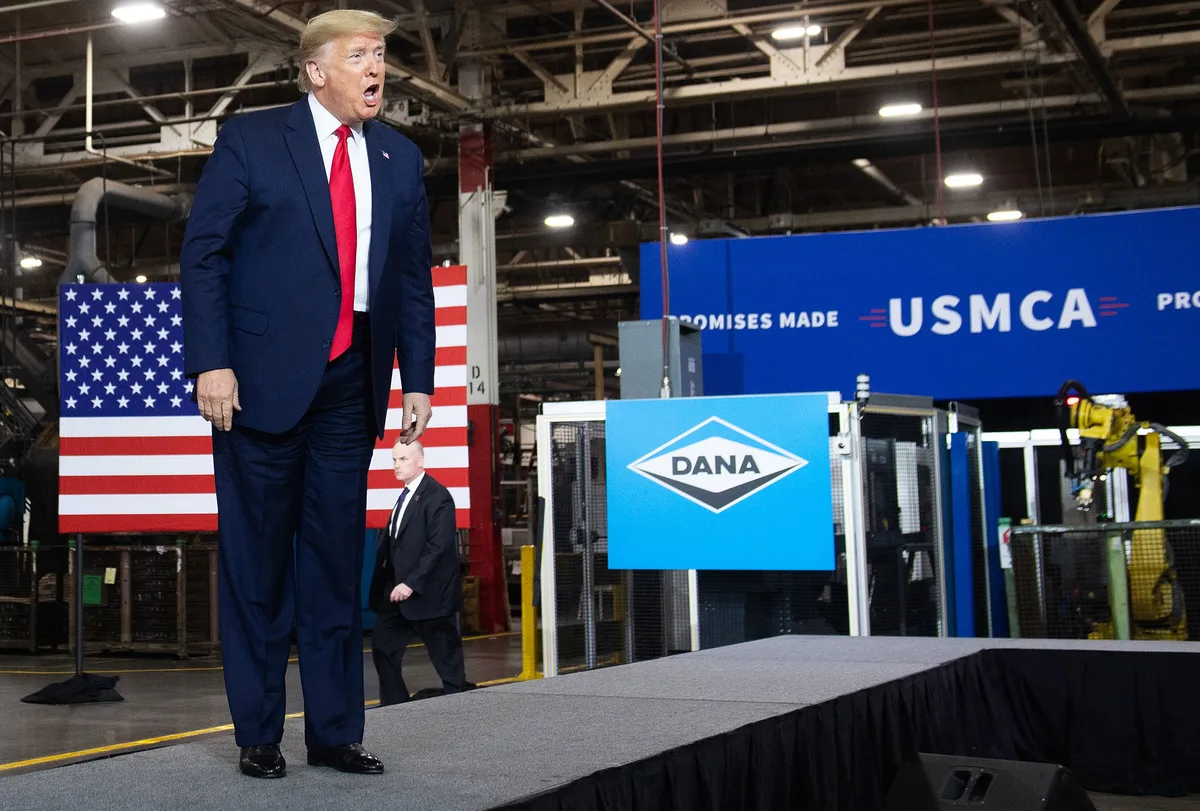
The U.S. auto industry is confronting heightened uncertainty over the potential failure to extend the United States-Mexico-Canada Agreement, a trade framework that has shaped North American manufacturing and supply chains since it replaced NAFTA in 2020. Without an extension, automakers could face significant disruptions to cross-border production flows that have become deeply embedded in how vehicles are built and sold across the continent.
At the heart of the concern are the deal's rules of origin provisions, which establish where a product is deemed to originate and which goods qualify for preferential tariff treatment. For the auto sector, these rules dictate what percentage of a vehicle's components must be sourced within North America for the car to move duty-free across borders — a calculation that affects everything from steel procurement to semiconductor sourcing.
Read more Russia Threatens Apple With $52M Fine Over App Bias →
The stakes are particularly high because modern vehicle manufacturing is deeply integrated across the U.S., Mexico, and Canada. A lapse or restructuring of USMCA terms without adequate transition time could force automakers to rapidly rethink supplier relationships, absorb new tariff costs, or relocate parts of their production footprint — all of which carry substantial expense and logistical complexity.
Analysts watching the negotiations warn that prolonged ambiguity is itself a business risk, as major capital investment decisions in new plants and electric vehicle infrastructure require regulatory certainty that a trade deal in limbo cannot provide. The industry's exposure underscores how tightly commercial policy and manufacturing strategy have become intertwined in the post-NAFTA era.
Continue reading at US Top News and Analysis.