ECB Launches Pontes Platform for Tokenized Asset Settlement
The European Central Bank has deployed the Pontes platform to settle wholesale tokenized assets using central-bank money, marking a major digital finance milestone.
The European Central Bank has deployed a new platform called Pontes, designed to settle wholesale tokenized assets directly in central-bank money, according to a report from CoinDesk. The move represents one of the most significant steps yet by a major central bank to bridge traditional financial infrastructure with emerging blockchain-based asset markets.
By using central-bank money — widely considered the safest settlement asset available — the ECB aims to reduce counterparty risk and bring institutional-grade reliability to tokenized markets. Wholesale settlement, which involves transactions between financial institutions rather than retail consumers, has long been identified as a prime candidate for tokenization given the scale and complexity of interbank dealings.
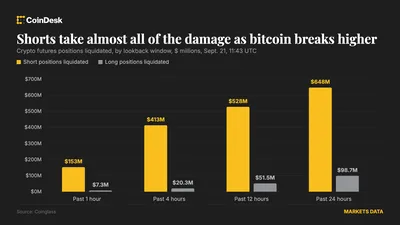
Read more Bitcoin Surges to $85,000 as Short Squeeze Wipes Out $648M in Bearish Bets →
The Pontes deployment signals that European monetary authorities are accelerating their engagement with distributed ledger technology, moving beyond exploratory pilots toward operational infrastructure. Central banks globally have been racing to establish frameworks that allow tokenized securities and other digital assets to be settled with the same finality and trust as conventional instruments.
For financial institutions operating in the eurozone, the ECB's move could provide the regulatory clarity and technical backbone needed to expand tokenized asset issuance and trading at scale. Analysts have noted that settlement in central-bank money removes a key friction point that has slowed institutional adoption of blockchain-based finance.
The broader implications for European capital markets are still unfolding, but the Pontes platform positions the ECB as an active infrastructure provider — not merely a regulator — in the digital asset space. Continue reading at CoinDesk.